
Ruijie Says Its 9 Billion Yuan Inventory Build Is a Chip Stockpile, Not Slow Moving Stock
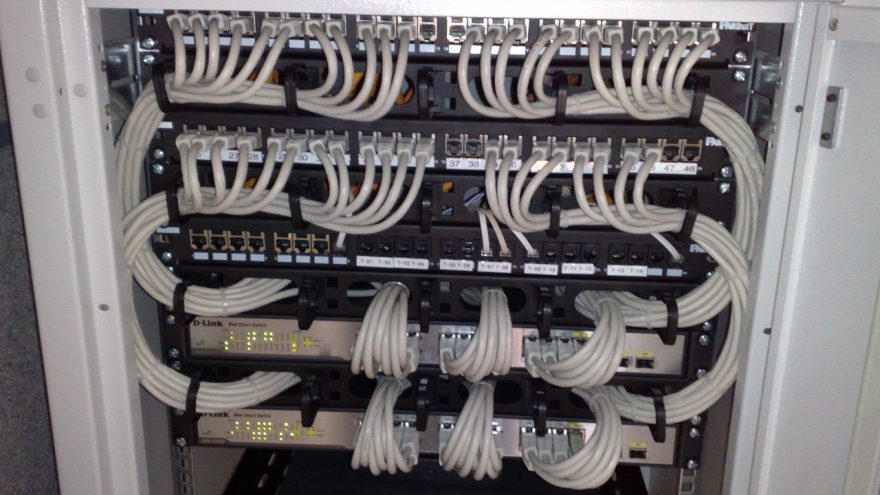
The number that got picked up out of Ruijie Networks’ third-quarter results, released on 19 October, was not revenue and not profit. It was the balance sheet. Inventory at the company, which trades on the Shenzhen Stock Exchange under code SZ301165, stood at more than 9 billion yuan at the end of the quarter, up more than 200 percent from the start of the year. On 20 October the company told Daily Economic News what that money was buying: chips, stockpiled deliberately as core raw material.
The trading results underneath are not the sort of quarter a company builds a stockpile in because it is struggling. Revenue for the first three quarters of 2026 was 14.596 billion yuan, up 36.66 percent year on year, and net profit attributable to shareholders was 1.081 billion yuan, up 58.87 percent. The share price was 82.20 yuan, for a market capitalisation of 91.541 billion yuan.
What makes the stockpile legible is the component market. Dell’Oro Group measured worldwide data center IT semiconductor and component revenue for servers and storage systems up 182 percent year on year in the second quarter of 2026, with DRAM and storage drive revenue growing at a triple-digit pace and average selling prices per bit more than doubling. Baron Fung, Dell’Oro’s vice president of research, said the growth came from higher memory and storage prices alongside continued server demand, and that supply constraints may ultimately limit hyperscaler capital expenditure plans. On the enterprise networking side the same firm measured campus Ethernet switch average selling prices up 19 percent in the quarter, with component shortages hitting availability and price at once, and expects memory shortages to shape that market well into 2027.
So Ruijie has put roughly a fifth of its quarterly revenue into chips, at a moment when memory prices are doubling and delivery slots are being allocated. It is a bet on the enterprise refresh cycle continuing, and on the company’s own ability to convert that stock into shipped boxes before the pricing turns. Buyers of Ruijie equipment will feel the same arithmetic from the buying side: memory content has entered the price of a switch, and the vendor holding the chips has a different exposure to that than the integrator holding none.
Supplier’s note: this is the kind of disclosure we read before quoting anyone a switch price, because a vendor carrying 9 billion yuan of chips in stock is not going to be the one discounting. The same squeeze shows up on our side of the counter in the enterprise access switch and next generation firewall lines: memory-driven cost increases have pushed pricing up through the second half of 2026, and lead times on the higher port-count models have stretched from around 6 weeks to 10 to 14 weeks, while the 8-port and 16-port PoE models that dominate small business and school projects still ship from stock in days. Buyers with a dated project should lock the switch and wireless content before the price move is absorbed into a quote, and we quote the current component position with a validity window, without a fixed price sheet. On the campus side we hold Wi-Fi 7 access points and compatible replacement parts for retired models, so an estate that has to be refreshed without waiting for new hardware still has a path. We would rather say that a stock position is the constraint and that the delivery date moves, than quote a price the order cannot be filled against.