
Nokia and T-Mobile Put a Live Voice Call on an AI-RAN, and Ericsson Put Numbers on Its Own Silicon
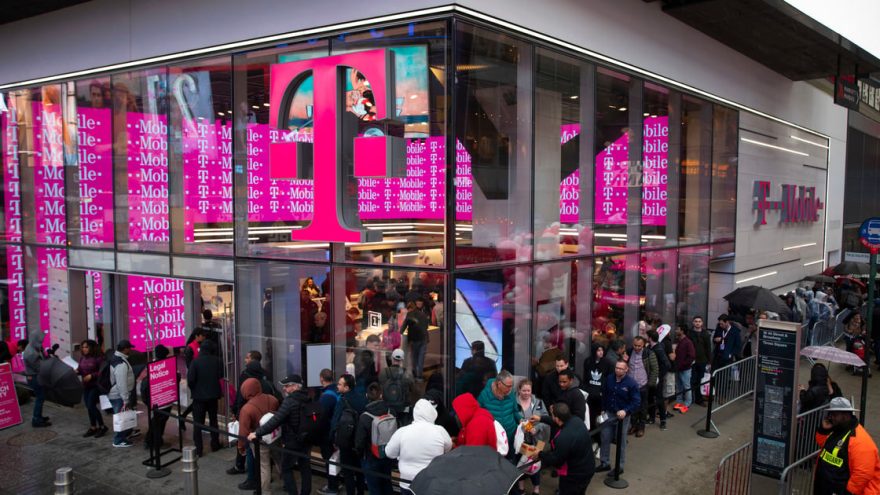
T-Mobile US has run what Nokia calls the first AI-RAN voice call on a live commercial network, using Nokia’s massive MIMO radio, anyRAN software and server infrastructure built on Nvidia’s Aerial RAN computer platform. Few details were released beyond that: which bands, which feature set, what the radio was doing at the moment of the call.
Pallavi Mahajan, Nokia’s chief technology officer, called it the first software-defined RAN call using accelerated computing and marked it as a step out of the lab, one year after Nokia and Nvidia announced their partnership. The next phase is other spectrum bands and AI inferencing workloads running alongside RAN functions. T-Mobile’s chief technology officer, John Saw, had said at Nokia’s press conference at Mobile World Congress in March that he would be “really upset” if he did not have the vendor’s AI-RAN system to test in the field within the year. Elsewhere, TelecomLead reported that Elisa completed Europe’s first live-network AI-RAN trials in Helsinki, running voice, mobile data and AI video analytics on shared computing infrastructure, and that Deutsche Telekom demonstrated 10 to 15 percent improvements in 5G uplink throughput, with commercial validation planned for 2027.
The Ericsson side came from the same operator in the same week, and with harder numbers, from T-Mobile’s own trials in New York. During a large-scale commercial trial, T-Mobile is running AI-managed beamforming, where an AI model trained on the carrier’s network data runs on Ericsson’s RAN compute and silicon to predict where demand sits and shift sounding reference signal resources accordingly. At the sites where the feature is active, T-Mobile recorded a 16 percent improvement in downlink throughput, 12 percent better spectral efficiency, a 10 percent increase in downlink data volume and 50 percent more advanced beamforming using full-band sounding reference signals, with the best results during peak hours. A second model, an AI-native scheduler with link adaptation, showed 10 percent better spectral efficiency and a 15 percent increase in downlink throughput in a separate large-scale trial. Gabriel Brown, senior principal analyst at Omdia, called the result a “wow moment” and said it shows AI models deployed directly in the base station can give measurable gains through software updates to already deployed equipment.
On the enterprise side of the same market, GSA counted 2,031 organisations in 88 countries deploying private mobile networks with contract values above 100,000 euros by the end of the second quarter of 2026, with customer references compounding at 37 percent a year since 2019 and 5G accounting for more than half of deployments announced since 2022. GSA reported 28 net new references above that threshold in the quarter, with manufacturing, education and mining the three largest sectors, and noted that 1,709 references now carry country detail, 85 percent of the total. The association also flagged that one vendor did not contribute to the update and another made a partial submission, estimating the omissions would account for 20 to 30 percent of expected references.
GSA’s data is a useful corrective here because it counts deployments and not revenue, and it separates the sectors. Manufacturing added six references in the quarter and seaports added eight, with hospitality adding three. On average 77 percent of the references in the database are non-public and submitted by members of the association’s private networks interest group, and in sectors such as military and defence, maritime and power plants more than 80 percent of references are not in the public domain at all. A private network that never appears in a press release is exactly the kind of installation that the AI-RAN software updates discussed above would apply to.
The argument over that silicon runs through Ericsson’s third-quarter results. Per Narvinger, the chief executive, said on the earnings call that owning its own ASICs is “an extraordinary asset” that makes it possible to get functionality fast and stay cost competitive, and put the installed base behind AI-native link adaptation at more than 60,000 base stations, with three operators already running it commercially.
The margins tell a different story about who is carrying the cost of the AI build-out. At the mobile networks business group, which accounts for almost two thirds of Ericsson’s revenue, gross margin shrank 0.2 percentage points year on year to 49.8 percent as sales rose 9 percent to 38.7 billion Swedish kronor, while operating margin improved 1.8 percentage points to 21.8 percent. Nokia’s mobile infrastructure group, which includes core software and licensing as well as radio, reported a second-quarter operating margin of 11.6 percent, down from 12.2 percent a year earlier. On the performance claims themselves, Chetan Sharma, founder of Chetan Sharma Consulting, said the baseline decides the outcome: a site already near theoretical efficiency has less headroom for AI-driven improvement than one running well below its ceiling because of interference or channel estimation errors.
The wider RAN market gives both trials a mixed backdrop. Dell’Oro Group measured private wireless RAN revenue growing at a mid-single-digit rate in the first half of 2026, down from the double-digit growth recorded in 2025, and revised the overall private wireless forecast downward again on weaker campus deployments, while noting the outlook for wide-area private networks had improved. The field stays concentrated, with Huawei, Nokia, Ericsson, ZTE and Samsung together accounting for about 95 percent of the global private wireless RAN market in the first half of 2026, Huawei the largest supplier by revenue, and Nokia and Ericsson dominant outside China. Dell’Oro still expects private wireless RAN revenue to compound at 10 to 13 percent over the next five years, one of the stronger growth pockets inside a broader RAN market Dell’Oro expects to stay flat.
Supplier’s note: for customers asking which of the two paths to plan around, the practical difference shows up in what we can ship. Nokia’s AirScale and anyRAN baseband and the associated remote radio unit are lines we hold and quote, with the radio hardware in stock and the software licences on a normal order cycle, and the same is true of Ericsson’s equivalent radio and baseband content. Where the two diverge is the compute layer inside the base station, and that is the part we do not stock as a finished product, because the Nvidia aerial computing content is specified per deployment and priced against the operator’s own roadmap. The gains T-Mobile reported on Ericsson’s path came from software updates on deployed equipment, so a hardware refresh does not have to be the trigger. On the supply side, 5G baseband and radio lead times are running 12 to 16 weeks across the major vendors, with the AirScale and Ericsson baseband both quoted inside that window, and we are not selling pre-standard AI-RAN compute as a product until the operators name the platform and the band plan. For customers with an existing fleet there is a cheaper route: the RRU and antenna refresh on existing sites, plus compatible replacement parts for retired radios, which gets most of the coverage benefit without a baseband swap.