
Nvidia and Cisco Draft a 400 Gbps-per-Lane Pluggable to Hold AI Fabrics to One Switch Layer
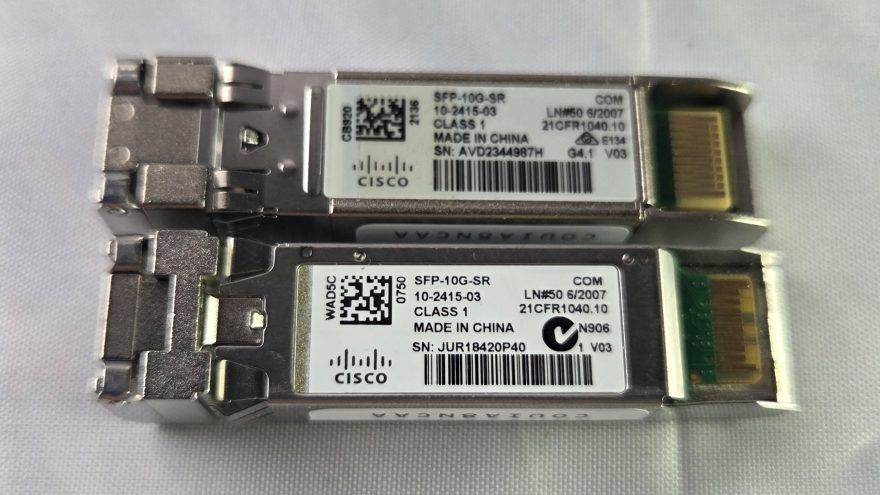
Nvidia and Cisco have published plans for an optical module they call Ultra-Dense Small Form Factor Pluggable, or USFP, specified for 400 Gbps per lane. The two vendors say the part lets AI factory builders double lane speed from 200 Gbps while keeping transceivers pluggable, so existing racks and fibre routes carry the next generation of accelerators.
The problem it answers is arithmetic. Every generation of AI hardware wants both more bandwidth per connection and more connections per switch, and once a switch is full, adding capacity can mean adding a switching layer plus the optical links that join it, lifting latency, power draw and cost. USFP is aimed at Ethernet AI fabrics that need a lane-speed step without rebuilding the data centre around them.
Buyers are already spending at that scale. Dell’Oro Group reported in September that switch sales in AI back-end networks passed front-end network sales for the first time in the second quarter of 2026, with Celestica leading Ethernet back-end switch revenue, Nvidia close behind and Cisco gaining the most share of any vendor to rank fourth. The firm’s July forecast put cumulative AI back-end switch spending at close to $1 trillion between 2026 and 2030.
Co-packaged optics, which Nvidia has also pushed, remain the alternative to pluggable modules at the top of that market.
Supply note: Pluggable optics stay in demand long after an OEM stops promoting them, and secondary supply is where most of that demand is met. Stock covers 400G and 800G OSFP and QSFP-DD transceivers in DR4, FR4 and 2xFR4 reaches, 400G ZR and ZR+ coherent modules for metro and data centre interconnect links, and matching DAC and AOC cables, with cross-reference notes for discontinued vendor parts. In-stock optics carry a two to four working day lead time from Hong Kong, and shipments can be split when a project needs one wavelength at cutover and the rest later. Returns on refurbished coherent modules repeat the same two causes: dust on the connector and firmware never matched to the host switch, so every module leaves with an insertion-loss reading and the software version it was tested against. Data centre integrators generally ask for spare pairs.