
Airtel Gabon Doubles Site Throughput With ZTE’s Combined FDD and TDD Massive MIMO
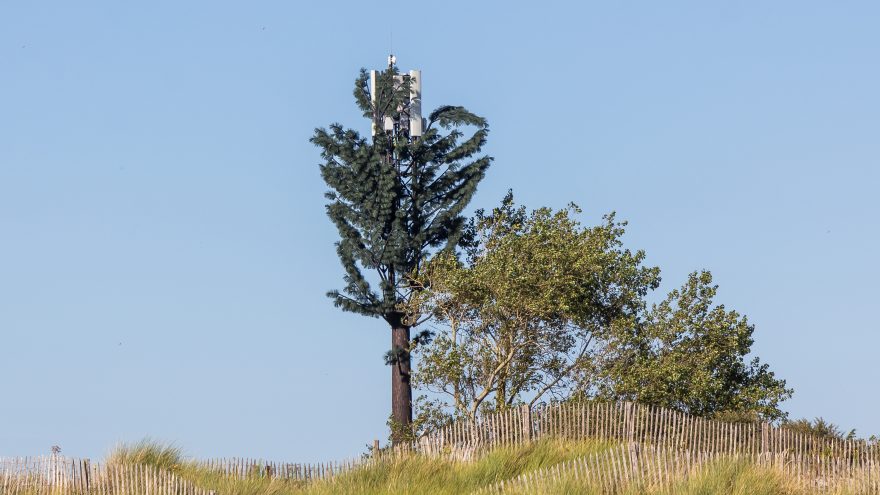
Airtel and ZTE have put the first commercial FDD plus TDD Massive MIMO system onto a live network in Gabon, the two companies said on October 13. The deployment in Libreville combines FDD and TDD bands inside a single active antenna unit, so spectrum already licensed for 4G carries more traffic while the operator prepares for 5G.
Measured against the previous configuration, site-level user throughput rose 107 percent, while traffic capacity gained 20 percent and physical resource block efficiency improved 41 percent. On the 2.6 GHz layer the same comparison showed throughput up 86 percent, capacity up 92 percent and PRB efficiency up 60 percent, gains ZTE attributes to multi-band coordination and automatic resource scheduling across the two duplex schemes.
Razvan Ungureanu, Airtel Africa’s chief technology officer, said the combined FDD and TDD antenna unit shows what the partnership delivers in spectrum efficiency and capacity, and that the two companies would keep pushing toward 5G.
Gabon gives that push a specific shape. GSMA Intelligence counts 3.27 million mobile connections in the country at the end of 2025 against 1.87 million internet users, a penetration rate of 71.9 percent, and Ookla’s West African market analysis puts the median mobile download at 42.25 Mbps in the second quarter of 2026 with latency of 179.8 milliseconds, the weakest reading among the countries it compared. Airtel and Gabon Telecom split the market roughly 47 to 53, so any capacity gain lands on a duopoly with little room to add subscribers.
No 5G licence award has been announced in Gabon, which keeps 4G evolution the practical route for both operators.
Supply note: Mid-band upgrades of this kind pull parts out of the secondary market faster than new-build programmes do. Stock covers 8T8R FDD radio units on 1.8 GHz, 2.1 GHz and 2.6 GHz, dual-band active antenna units, and the baseband boards that pair with them, which lets a capacity layer go up without rebuilding a site. Cross-referenced part numbers cover the cases where a specific revision is on OEM allocation, and in-stock units carry a two to four working day lead time from Hong Kong. Twelve years of handling refurbished radios shows the failure pattern clearly: water ingress at the jumper and loose DC feeds account for more returns than board faults, so every unit leaves with a tested VSWR figure. Integrators on fixed budget deadlines usually order mixed pallets instead of single models.