
Nokia Starts Putting GPUs Into Base Stations, and the Analysts Split
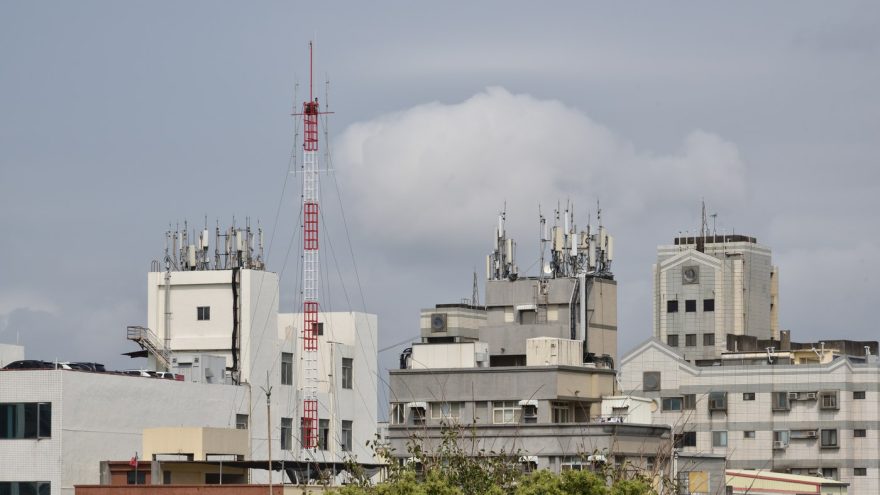
Nokia is about to find out whether telcos will buy graphics processors for their base stations. The Finnish vendor has tied its radio access network roadmap to Nvidia GPUs, stopped developing new custom silicon with Marvell Technology, and plans to ship AI-RAN hardware commercially early next year. Several operators are testing the products this quarter. None has said publicly what the first results look like.
The technical objections are specific. A basestation has to finish critical processing inside a transmission time interval of about 500 microseconds, and a GPU running a large model cannot always hit that budget. Nvidia’s chips have never done RAN compute before, and they are associated with data centres, where power and cooling are easier to arrange. “You will not be running the RAN workloads on those GPUs,” said Yago Tenorio, Verizon’s chief technology officer. “You’ll be using them for what they are really good at, which is to run AI inference.”
Nokia’s answer is a slimline GPU that slots into the existing Airscale chassis, with the same power envelope and the same price as the Marvell silicon it replaces, plus years of software upgrades. Chief executive Justin Hotard said AI-RAN lets customers “reduce the ongoing hardware investment, or to elongate that” and then collect improvements through software.
Analysts are split on how much performance that buys. Omdia expects the AI-RAN market to exceed a cumulative $200 billion by 2030, and Dell’Oro Group puts the annual macro-RAN market at roughly $30 billion, with one to two million macro sites shipped a year. Dell’Oro has also noted that operators show limited appetite to pay more than $10,000 for a GPU per sector.
Marcus Weldon, a former Nokia chief technology officer, is blunter. “If you don’t have a companion strategy that’s based on classic ASICs, you really have created jeopardy,” he said. Weldon puts the realistic gain at 20% to 30%, with a doubling achievable only in narrow cases. Vincent Loncke, a former Qualcomm developer, said the software lock-in to Nvidia’s CUDA platform leaves Nokia without a fallback: “If the GPU thing doesn’t catch on, they don’t have an alternative.”
Even a white paper endorsed by Nokia trims the headline. Chetan Sharma Consulting, which prepared it, writes that spectral efficiency improves by 40% to 50% under favourable conditions at target sites.