
Airtel Africa Doubles Network Capex to $657 Million and Reaches 4,094 5G Sites in Seven Markets
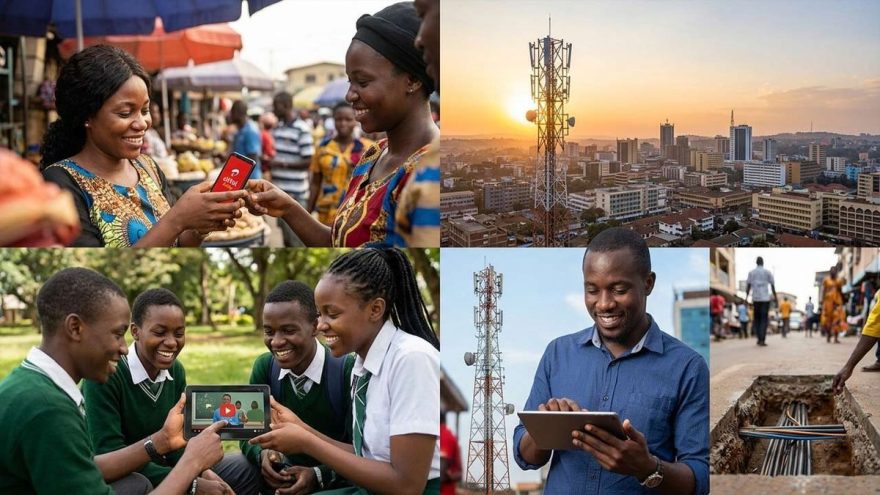
Airtel Africa spent $657 million on capital projects in the six months to September 2026, 106.5 percent more than a year earlier, and used the money to add roughly 4,200 sites and more than 4,400 4G sites across its 14 markets. The operator’s 5G footprint now stands at 4,094 operational sites spread over seven countries.
The build is still overwhelmingly 4G. Of Airtel Africa’s network sites, 99.2 percent carry 4G, while 5G reaches only half of the markets where the company holds licences. The six-month period also added more than 2,000 kilometres of fibre, taking the total footprint past 83,000 kilometres, which matters more than the 5G headline because most new sites have no realistic microwave path to a core node.
Customer numbers explain the priority. Airtel Africa served 193.9 million customers at the end of September, of whom 89.9 million used data. Doubling capex against a customer base growing in single digits is a capacity decision, taken where home broadband demand and rural coverage both pull on the same transport links.
GSMA Intelligence puts the continental picture around that spending. Its Mobile Economy Africa 2026 report values mobile’s contribution to African economies at $240 billion in 2025, equal to 7.8 percent of regional GDP, and projects $290 billion by 2030. The same research finds 63 percent of the population, close to a billion people, covered by mobile broadband but not using it, which is a device and affordability problem that network spending alone does not solve.
That gap shapes what operators buy. Sites in areas where usage is low earn less per unit of capex, so equipment efficiency and power consumption weigh more heavily than peak throughput, and multi-band radios that cover 900MHz and 1800MHz alongside 2100MHz reduce tower load and diesel burn. Airtel Africa has not disclosed which vendors supply the new sites, how capex splits by country, or what share of the 5G build sits in Nigeria, Kenya and Zambia.
The $657 million figure also carries a currency caveat. Airtel Africa reports in dollars while most of its revenue arrives in local currency, so a capex doubling measured in dollars understates the local-currency increase in markets where the naira, kwacha and shilling moved sharply against the dollar during the period.
Supplier’s note: African operators replacing 3G and early 4G plant are the steadiest buyers we have for refurbished radio equipment, and Airtel’s site count gives a sense of the volume moving through the channel. We supply Huawei RRU 3900 series and BBU 5900 baseband units, plus Ericsson Baseband 5216 and Radio 2212 units, all tested and firmware-aligned before shipment. Typical lead time is 4 to 6 weeks to Lagos, Nairobi or Dar es Salaam including documentation and customs paperwork, and consolidated shipments of 20 to 40 units cut freight per unit considerably. Buyers should confirm band configuration against local spectrum assignments, since 900MHz and 1800MHz variants are not interchangeable, and should order surge protection and remote radio unit jumpers with the radios because local sourcing is unreliable. Pre-shipment inspection reports and sample test logs are available.