
A 169-Year-Old Operator Wants to Be AI-Native, and Its Average Employee Is 45
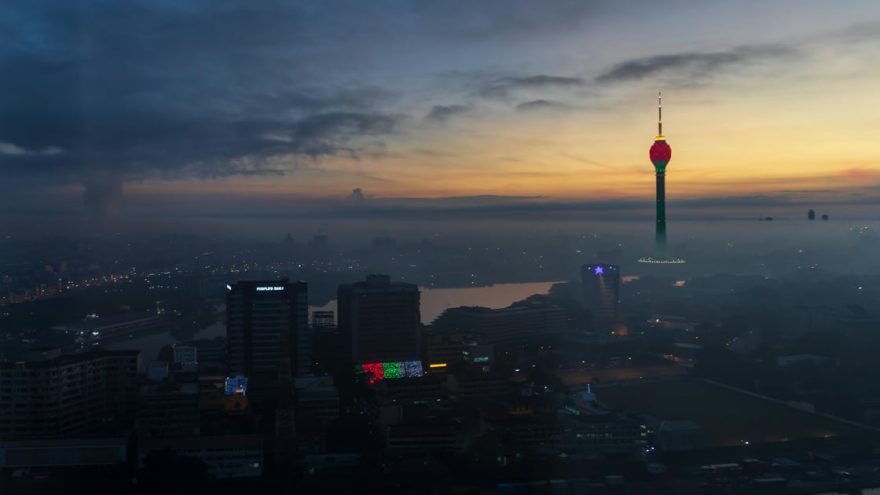
Sri Lanka Telecom has set itself the goal of becoming an AI-native telco, and the executive describing the plan was careful about the word ambitious. “It has become a strategic priority for us to build an AI-native telco, although it is a very ambitious target,” said Ishari Siriwardane, deputy chief transformation officer, in an interview during FutureNet 2026. The company traces its origins to a government department founded in 1858, went through privatisation with Japan’s NTT as strategic investor, and now trades on the Colombo Stock Exchange with the state still holding 52 percent.
The work started about four years ago with a digital maturity assessment, which produced more than 20 initiatives and a dedicated transformation division inside the IT group. A Center of Excellence for AI followed, along with a head of data and AI. Customer-facing chatbots and assistants now sit in front of back-office agents that pull information from multiple systems, and Siriwardane said the cycle time for resolving a customer issue has improved as a result. Credit control is next, with collection actions personalised on customer behaviour and payment history.
On the network side the picture is more specific. AI is helping with fault identification and resolution, particularly in the wireless network, but Siriwardane said the automation has not reached the autonomous level. Her description of the obstacle is a single sentence that explains why so many AI programmes stall: a very fragmented and heterogeneous network, running on legacy infrastructure that makes new solutions hard to introduce.
The people problem is the one the company has measured. The average employee is more than 45 years old, and Siriwardane described the task as changing mindsets, getting staff to adapt to AI and sustaining that change, while handling the fear that AI will take jobs.
Training is being run at a defined target. Of roughly 3,500 staff, she said 50 percent have been trained and the aim is to finish by the end of the year. Microsoft Copilot licences have been provided to everyone, with different versions matched to employee profiles.
Cost discipline shapes the rest. Siriwardane said token costs are rising and the company does not want them to hit the balance sheet, so it is evaluating cheaper open source models for internal use. That choice lands on a small market: Sri Lanka had about 22 million people in 2025, and SLT decided against a nationwide 5G rollout, keeping 4G as the mainstream network and using 5G in strategic areas such as airports and stadiums. Its rival Dialog Axiata reported group revenue of Rs 95.5 billion for the first half of 2026, up 9 percent year on year, with group EBITDA up 23 percent to Rs 50 billion and an EBITDA margin of 52.3 percent. An AI-native operator on a small island has a smaller base of customers across which to spread the investment.